

Travel Is Not The Problem
On slow travel, performative tourism and the strange morality of telling people to stop exploring

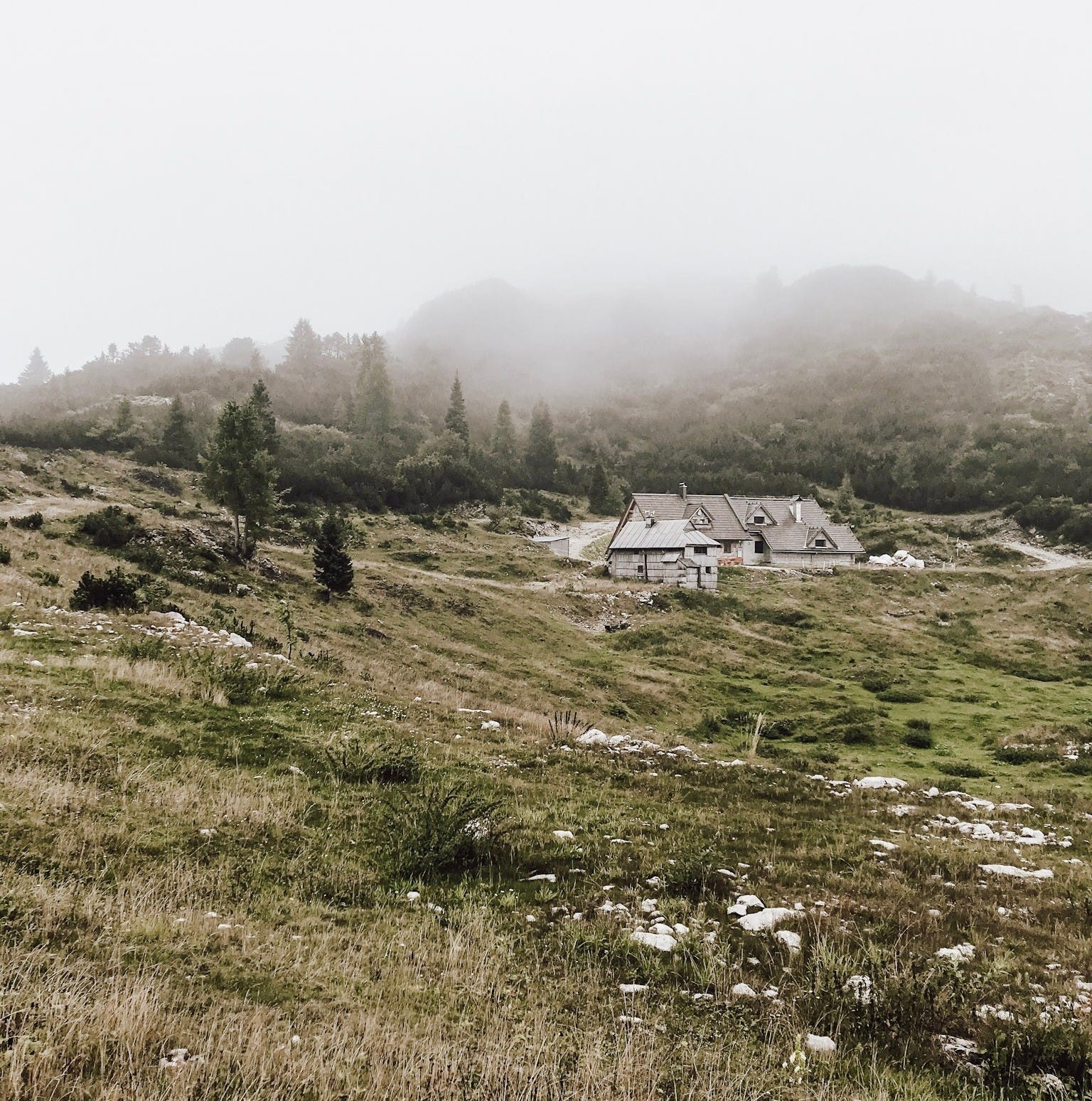
I’m sitting on a mountain trail, 2000 metres above sea level. The rain is drizzling, each drop on the back of my neck feels like a small sting. Ahead of me, the Julian Alps have disappeared entirely into fog. The path I’d planned to hike- the reason I came- is invisible. Technically, the trip is ruined.
At the time, I was very active on social media. My travel photography and videography were gaining real traction and I was getting a fair amount of commissioned work. Every trip had become, at least in part, a content opportunity. Even though the Slovenia trip was entirely for myself, and not shaped by a hotel collaboration or tourism board assignment, I still packed my photography gear and felt a slight pressure to document and share the experience.
And here I was, in the middle of fog, rain and nothing worth capturing.
I waited for the disappointment to arrive, but it didn’t.
Instead, I felt free. Free from performing, producing, finding the right angle to capture the shot. Just the trail, and a strange relief of being completely off the hook. The mountain had made the decision for me.
Eventually I gave up on the hike and made my way back to the alpine hut where I’d spent the night to collect my bag and leave. As I approached, I noticed a small house I’d seen the previous evening, perched improbably on the mountainside. I’d assumed it was someone’s holiday home. But it wasn’t. Someone lived there.
And just as I approached, a man was engaged in a serious pursuit of a chicken across his small mountain farm.
I just stood there and watched, probably for longer than was socially acceptable. The chicken had opinions and the man had a strategy, but neither seemed to be winning. Behind them was a whole world I hadn’t even noticed because I’d been so fixated on my hiking plans. The evidence of an ordinary life being lived on the side of a mountain.
I felt like I’d been let in on something private and completely wonderful.
Eventually, the man caught the chicken and, noticing I’d become far too invested in the situation, wandered over to say hello. We chatted for a bit and it turned out he was the owner of the only restaurant on the mountain, where I’d had breakfast earlier that morning. Seeing my disappointment about the weather, he suggested I visit Vintgar Gorge instead, which at the time still felt like one of Slovenia’s best-kept secrets. It hadn’t even crossed my radar and I would have completely missed it if I hadn’t met him.
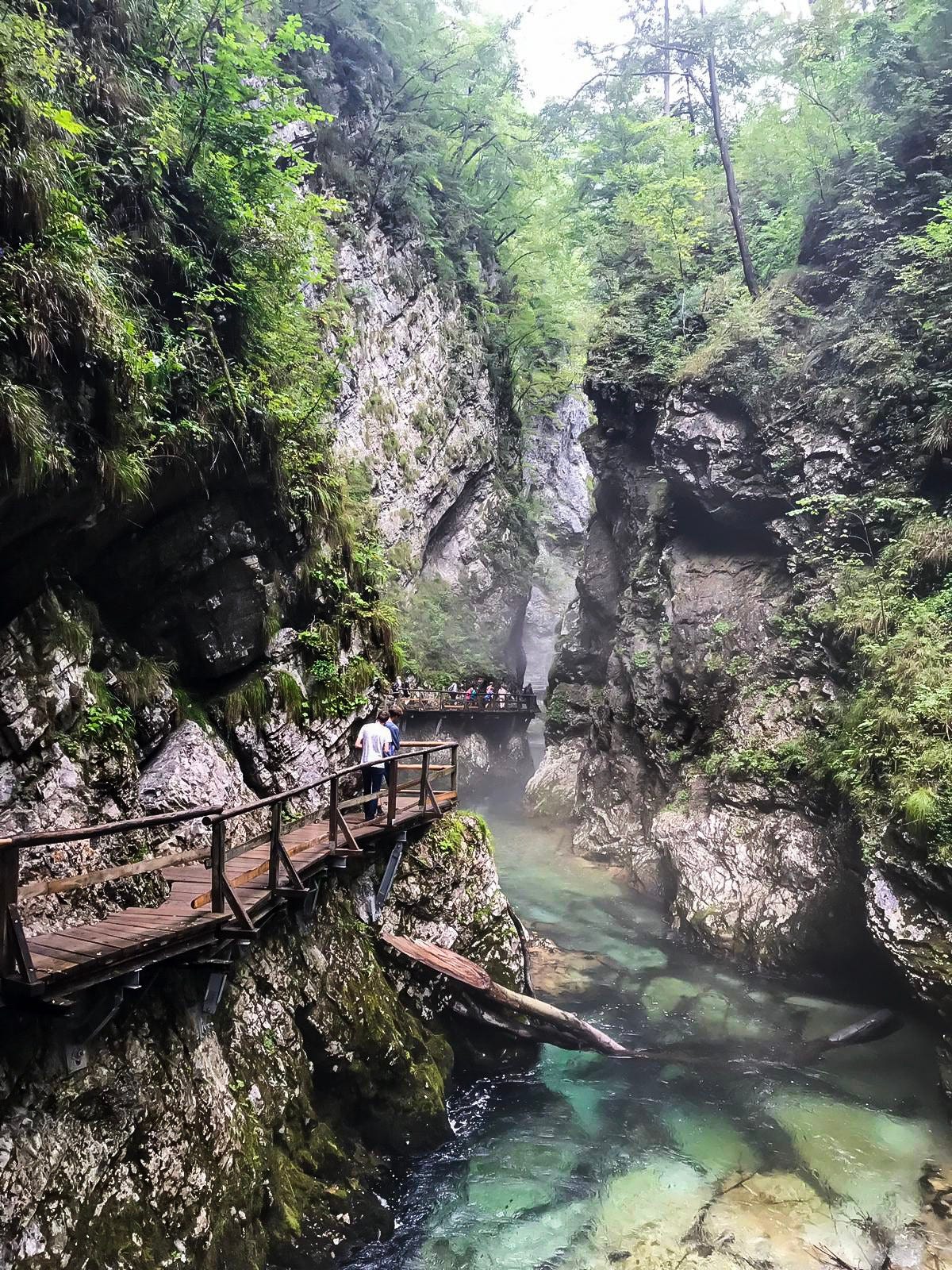
That moment cost nothing. It was on nobody’s itinerary and existed only because my plans had fallen apart and I’d slowed down enough to still be standing there when it happened.
I remember feeling one of the clearest moments I’d ever had while travelling. And a question forming in my head that I’ve asked myself on every trip since: what am I actually travelling for?
I ask because there’s a growing conversation that the answer to our broken relationship with travel is simply to do less of it. Stay home. Explore your own backyard and tend to what’s already around you.
I understand the impulse. But I think it’s answering the wrong question.
Our relationship with travel is not a healthy one. Travel has become something many people consume at high speed, moving through places quickly enough to photograph them but not long enough to absorb them. And the environmental weight of all of this is real and impossible to ignore.
But broken how, exactly?
I think the diagnosis matters. Because if we misunderstand what has gone wrong, we risk offering solutions that sound sensible while missing the point entirely.
The problem was never travel itself. It was the speed with which we travel.
Slow travel, and I don’t mean that as a trend but as a genuine philosophy, is almost the opposite of what most people imagine when they picture a holiday. Real slow travel is uncomfortable sometimes, boring even. It asks you to stay somewhere long enough to feel genuinely disoriented, both physically and mentally. It forces you to eat badly once or twice, to have a day where nothing happens and you have to sit with that.
The weather in Slovenia didn’t ruin my trip. It stripped the trip of its original purpose and left something more genuine underneath.
You can’t have that experience on a ten-day, four-country itinerary. That kind of experience requires time, and time is the one thing we’ve collectively decided we can’t afford to give travel anymore.
But I also think the conversation is shaped by who gets to have it. The loudest voices in the “travel less” conversation tend to belong to people who have already travelled extensively in their twenties and thirties. And it’s worth being clear about what travel means here - because boarding a flight at your boss’s request to sit in a meeting room on the other side of the world doesn’t make you a traveller. Now, settled into a different stage of life, they suggest that perhaps the rest of us should reconsider our own desire to go elsewhere.
When you have built your worldview, perhaps even your career, on the back of moving freely through the world, and then suggest that others might be better off staying put, that irony deserves at least a moment of self-examination.
Travel has never been equally accessible. It’s shaped by passport privilege, income, time, and life’s circumstances. For many people, the window to travel freely - before mortgages, children, ageing parents- can be very narrow. To fill that window with a philosophical argument for staying home, delivered by someone whose window has already closed naturally, is not wisdom.
The real question is whether we’re travelling with enough curiosity, enough presence and enough slowness to let a place actually reach us, and maybe change us. That’s the conversation worth having.
I often think about that morning in Slovenia. I’ve had other moments like it since, moments that produced nothing particularly shareable or impressive, but which I remember far more clearly than many bigger experiences.
These moments didn’t make me a different person overnight. But they gave me something that my ordinary life- which I value and return to gratefully- couldn’t give me in the same way. A different quality of attention and a better understanding of myself.
I don’t know if that’s available to everyone in every season of life. But I think it’s worth protecting the possibility of it, rather than theorising it away from the comfort of somewhere you have already arrived.
Travel, done honestly, is one of the few remaining places where you can still be genuinely surprised by yourself.
I really love how you pointed out the privilege in the people who are saying to travel less. I find that a lot with people who say stuff like, “Don’t go to Paris. It’s so crowded and overhyped.” But they’ve already been to Paris so it feels a little hypocritical to judge the hard working person with two weeks off a year who just wants to see the Eiffel Tower.
Thank you for sharing your insights. I feel many are collectively having these realizations around travel, and the speed and depth at which we consume it, right now.